Losing focus while reading is two separate failures wearing the same face. In one, something pulls you away and you know it happened: the phone, the noise, the thought about Tuesday. In the other, nothing pulls you anywhere, your eyes keep moving down the page, and nobody is home behind them. Almost every list of focus tips addresses the first kind, which is why the advice so often feels written for someone else.
Why does my mind wander when I read?
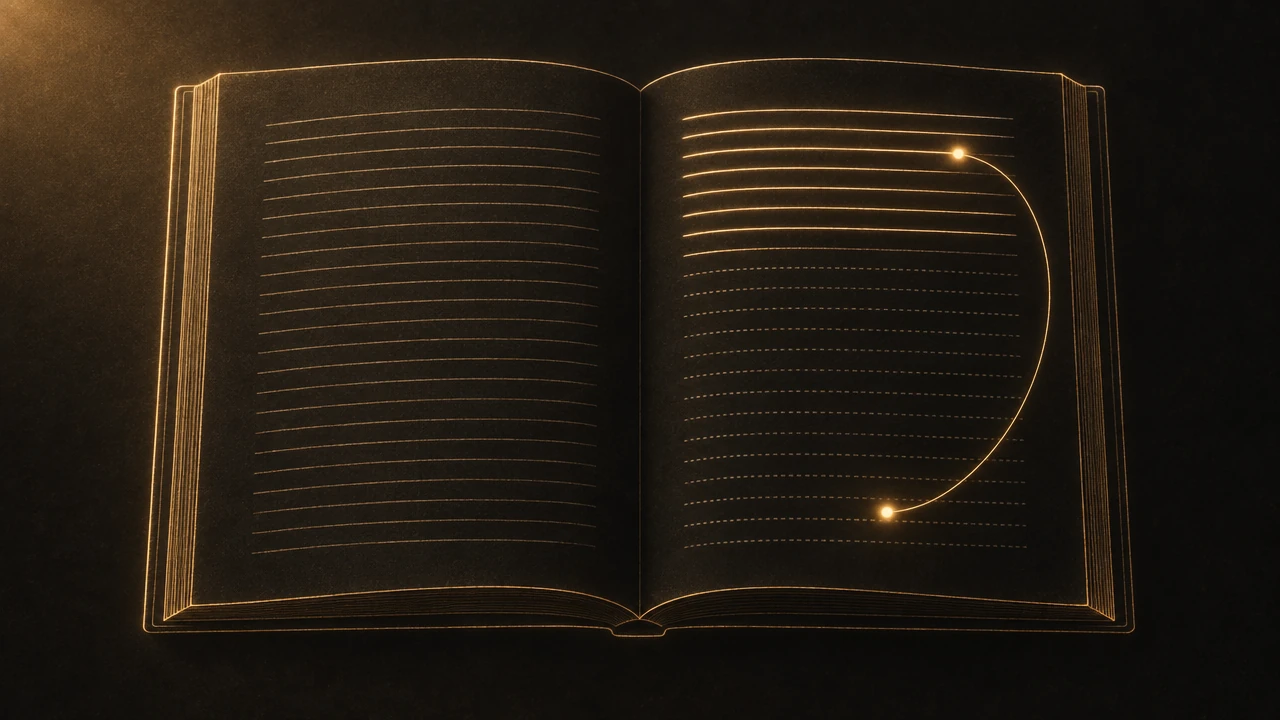
Because reading does not need your mind present to continue. The eye movements that carry you down a page run partly on their own, and they keep running after comprehension has stopped. Researchers call this mindless reading, and it leaves a measurable signature. A review in Frontiers in Psychology by Fabry and Kukkonen summarizes the eye tracking work this way: compared with attentive reading, mind wandering episodes show fewer fixations, longer fixation durations, and fewer regressions to earlier words. The eyes stop checking their own work.
Sit with what that means for a second. During the minutes you were gone, you were not struggling. There was no effort, no felt moment of losing the thread, no signal at all. The same review notes that mind wandering is reliably associated with poorer reading comprehension. The comprehension loss is the obvious cost. The expensive part is that the failure is silent while it is happening.
Research on the subject separates two ways an episode ends. Sometimes you catch yourself. Sometimes an experimenter interrupts and asks, and only then do you discover you had been gone. Both happen while reading, and the second category is the one no tip list can reach, because you cannot arrange your desk against something you never noticed.
Which kind of focus loss do you have?
Ten minutes and a pen will tell you. Read normally, and every time you notice you have stopped taking anything in, put a small mark in the margin and write one word: what you were doing instead. Then look at the marks.
- Marks with a cause. "Phone", "kitchen", "hungry", "email". Something took you. This is a capture problem, and the standard advice was written for exactly this.
- Marks with nothing behind them. "Blank", "no idea", "just gone". Nothing took you, the channel simply went quiet. Rearranging the room will not touch this.
- Almost no marks, and you still cannot summarize the chapter. You are not catching the episodes at all. The noticing itself is what needs work, before any other fix has something to act on.
Most people assume they are in the first group because that is the only group anyone writes about. The pen usually says otherwise.
What actually works against the loud kind
Worth keeping, because for a capture problem this advice is correct and cheap:
- Put the phone in another room rather than face down on the desk. Book Riot makes the point that distance beats discipline, and it is right.
- Use a timer if a fixed block helps you commit. The Magnetic Memory Method prefers holding an intended duration in your head over setting an actual clock, on the grounds that it builds the attention rather than renting it. Try both, keep the one that survives a week.
- Instrumental sound or nothing. Anything with talking competes for the same channel the text needs.
- Give yourself permission to abandon a book. Book Riot's writer reports that their reading volume went up once they stopped forcing their way through books they disliked, and a book you are resisting generates its own distractions.
None of this is wrong. It is simply aimed at the failure that announces itself.
What to do in the ten seconds after you catch yourself
Here is where the ranking pages go quiet. All of their advice is preventive and belongs to the time before you sit down. Nobody says what to do at the moment of the catch, which is the only moment you actually get.
Three things, in order.
- Do not restart at the top of the page. Back up to the last sentence you can restate without looking. That is the real boundary of what you have, and it is usually earlier than you would guess.
- Say that last idea out loud in your own words before you continue. Explaining it is the quickest check on whether you followed. If the summary comes out mushy, you went further back than you thought, so keep reversing until it comes out clean.
- Write your one word and keep going. The log is what turns a vague sense of being scattered into a pattern you can act on.
There is also one preventive move that aims at the quiet failure rather than the loud one: give the text something to answer. Before a chapter, write down the question you expect it to settle. A page you are interrogating is much harder to drift out of than a page you are receiving, which is the same mechanism behind annotating as you read and taking notes on a book. Those methods do not work because of the marks they leave. They work because they make passive reception impossible.
Do audiobooks fix it?
Book Riot recommends audio for exactly this problem, and that advice is half right in a way worth spelling out.
If your problem is capture, audio genuinely helps. There is no screen to tempt you, no page to stare past, and you can walk or cook while you listen, which gives the restless part of you something to do. That is a real fix for a real failure.
Decoupling is a different matter. It does not need eyes. It needs only a channel that asks nothing of you, and audio asks less than print does. Worse, audio removes the one warning light you had. In print you notice the reread: you arrive at the bottom of the page with nothing in your head and the evidence is sitting right there in front of you. In audio the episode simply proceeds. Nothing stalls, nothing repeats, and you come back four minutes later with no sense that you ever left. That comparison is reasoning about how the two formats differ rather than a measured finding, but it matches what most people describe about the way listening fails them.
So the honest answer for audio is not to concentrate harder. It is to build the interruption in, because the format will never interrupt you on its own.
Where Graspd fits
Graspd is an AI companion for nonfiction listening, and it exists because of the failure in the paragraph above.
You mark a moment while the episode keeps playing, and the transcript around that position is kept with the mark. Afterwards you can talk about what you heard, and the companion only knows the part you have actually reached, so it can question you about the material without giving away what comes later. Recaps and quizzes come from the same boundary, which makes a quiz an attempt at recall instead of a preview. The point is to put a question in the place where audio puts nothing.
It is not the right tool for everyone. If you want to clip passages and push them into a notes app, a highlight focused product does that better, and we compare the two approaches honestly. If your focus problem is entirely a capture problem, fix the room first and save yourself a subscription.
There is a hard limit on sources, too. Graspd works with podcasts and DRM free audio files. Audible and other DRM protected audiobooks cannot legally be imported by a third party app, and no workaround changes that.
FAQ
Why can't I focus while reading even when the room is quiet?
Because silence only removes one of the two causes. A quiet room fixes distraction, but mind wandering needs no distraction to start. Your eyes continue down the page on partly automatic movements after comprehension has stopped, so nothing in the room signals that anything has gone wrong.
How do I stop my mind from wandering while reading?
You will not stop it, so aim at catching it sooner instead. Read with a pen, mark every episode you notice, and back up to the last sentence you can restate in your own words rather than restarting the page. Writing down the question a chapter should answer before you start also shortens the drifts.
Is losing focus while reading a sign of ADHD?
Not on its own. Mind wandering during reading is ordinary and happens to everyone, including strong readers. If the difficulty reaches far beyond reading, has been present since childhood, and costs you at work or in relationships, that is a question for a clinician rather than for a reading method.
Does reading out loud help you focus?
It helps against the quiet failure specifically, because speaking cannot run on autopilot the way silent eye movement can. The cost is speed, so most people use it selectively: read normally, and switch to reading out loud for the dense pages where you keep losing the thread.
Do audiobooks help if I cannot concentrate on a book?
They help if screens and page fatigue are what break your concentration, since listening frees your hands and eyes. They do not help with drifting, and they hide it, because audio never stalls or repeats the way a reread does. Listening needs a deliberate interruption built in, such as a mark or a question.