Let me start where an honest comparison has to start: Snipd is good. If what you want is to clip the best 40 seconds of a podcast, get an AI summary of it, and push it into Notion, Obsidian or Readwise, it does that well and it does it faster than the alternatives. This post is not an argument that it is bad software, and if that is your problem, use it. Where those clips land afterwards is its own decision, and the Readwise alternatives worth considering differ mainly in whether anything ever comes back out.
This is for a different problem, which is the one I had: I was collecting highlights and still couldn't tell you what was in the episode. If you have not got as far as clipping and the question is still how to get anything at all out of an episode while your hands are busy, start with learning from podcasts instead.
Extracting versus processing
The distinction that matters here isn't a feature list, it's a direction.
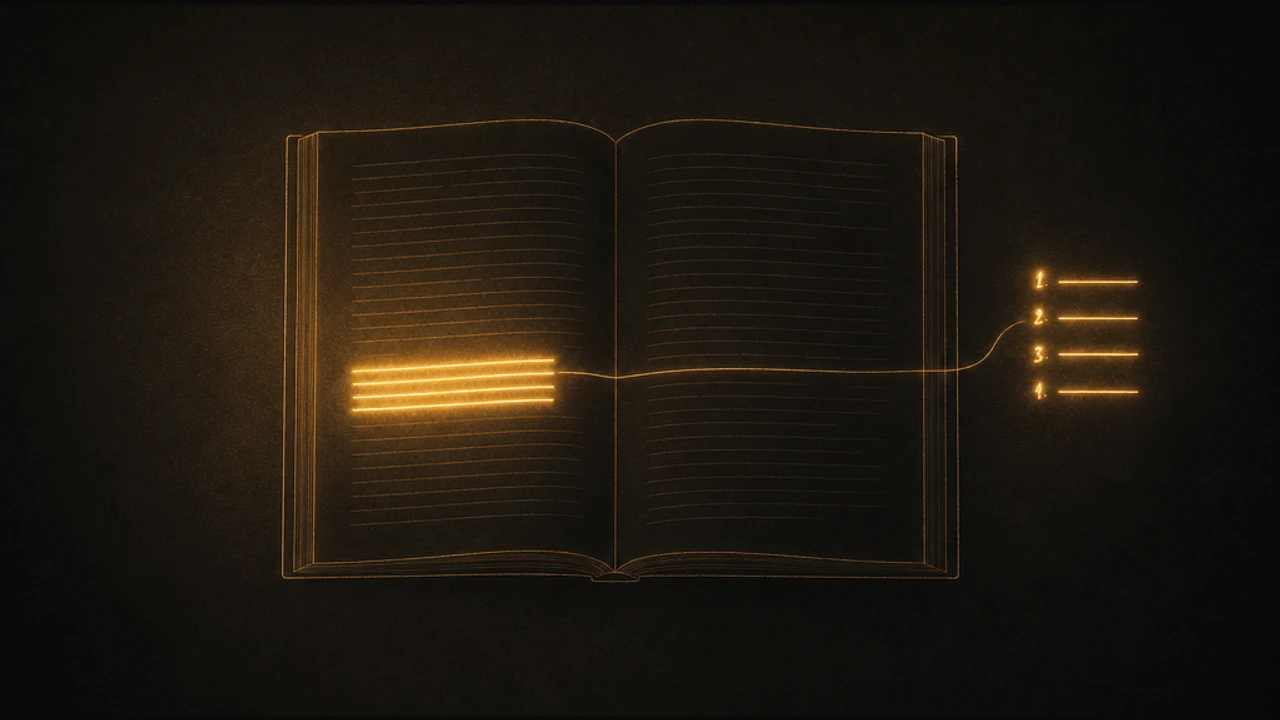
Extraction takes the ideas out of the audio and puts them somewhere safe. The highlight, the summary, the export to your notes app. The promise is that you now have it.
Processing puts the ideas through you. You say what a passage meant, you answer a question about it a day later, you connect it to something you marked two months ago in a different show. The promise is that you now know it.
Extraction is a storage problem, and it is largely solved. Processing is a memory problem, and it is not, because the effortful part cannot be delegated. That is the whole disagreement. A tool that summarizes an episode for you has taken over the exact step that would have made you remember it.
I care about this enough that it's the founding principle of Graspd: build the listener's memory, don't outsource it. Every feature has to survive that test, which is also why Graspd deliberately does not do some things you might expect.
What each approach optimizes for
| Highlight extraction (Snipd and similar) | Graspd | |
|---|---|---|
| Core action | Clip the passage, summarize it | Mark the moment, say what it meant to you |
| Where the words come from | The host's, then the model's | Yours. The model's text is evidence, not the note |
| What you get after listening | A library of snips, exported | Recaps and quizzes from what you heard |
| AI's relationship to the episode | Knows the whole episode | Knows it only up to your position, so no spoilers |
| Cross-source connections | Search your highlights | Suggested links between marks across books and shows |
| Best when | You want a clean archive of good passages | You want to still have this in six months |
Two honest caveats about that table. First, it compares approaches, not release notes. Snipd ships quickly, so check their site for what it does today rather than trusting a competitor's summary of it. Second, plenty of people genuinely want the archive, and for them the left column is the right answer.
The part no other tool does: the AI stops where you stopped
This is the piece I would defend hardest, and it took the most work to build.
When you ask Graspd's companion a question, it does not receive the episode. It receives the transcript up to your current listening position, and nothing after it. Search works the same way. A transcript search is capped at your position server-side, so the model cannot reach past it even if it tries.
Two things follow. The obvious one: no spoilers. You can ask "what's the argument he's building here?" at minute 20 of a 90-minute episode without being told how it resolves. Ask any general assistant the same question with the show's name attached and you get the conclusion, the criticism and the follow-up episode.
The less obvious one, which matters more day to day: the answers are about what you heard. Not the book in general, not what the internet says about the book. It is the forty minutes currently in your head. That is what makes it feel like talking to someone listening along with you rather than someone who read the reviews.
Quizzes, and why they are the point
The retrieval step is the one everybody skips, so Graspd generates it: quizzes drawn from what you have actually listened to, plus recaps of the stretch you covered.
This isn't gamification. Being asked a question and having to dig for the answer strengthens memory considerably more than rereading the same passage. The testing effect is about as well established as findings in this area get. A saved highlight is a rereading device. A question is a retrieval device. They are not the same tool wearing different clothes.
The same logic shapes how you keep things from a conversation with the companion. When you want to save something the AI said, Graspd doesn't file the AI's paragraph. It opens a field where that message becomes the evidence and you write the takeaway in your own words. It also labels it as coming from a conversation, so you never mistake a model's sentence for something the author said. Marginally more work, which is the point.
Where Graspd is the wrong choice
Worth saying plainly, because you can find this out in five minutes anyway:
- Audible and other DRM audiobooks cannot be imported. Not by Graspd, not by Snipd, not by anything legal. Podcasts import in seconds; audiobooks work if you own DRM-free files.
- If you want a highlight pipeline into Obsidian or Readwise, that is exactly what extraction tools are built for, and Graspd is not trying to be a better version of it.
- If you listen mostly for entertainment, this whole category is overhead. Nothing wrong with just listening.
- It's young. Solo-built, in beta, with the rough edges that implies. I'd rather say that here than have you discover it on day two.
If you're weighing this up, the two posts behind it are how to remember what you listen to (the method) and taking notes from podcasts without stopping (the capture half). For a wider look at the category, including flashcard tools and note-to-quiz apps, see active recall apps for podcasts and audiobooks.
FAQ
What is the best Snipd alternative?
It depends which half of the problem you have. For clipping and exporting podcast highlights, the alternatives are other extraction tools, and Snipd is strong there. If your highlights pile up unused and you want to actually retain the material, you want a tool built around recall: marks in your own words, plus recaps and quizzes drawn from what you heard. That is the gap Graspd is built for.
Does Snipd quiz you on what you listened to?
Snipd is built around snips, AI summaries and exporting to note apps rather than around active recall. Graspd generates quizzes and recaps from the portion of an episode or book you have already heard, which is the retrieval practice step that turns listening into memory.
Can any app import Audible audiobooks?
No. Audible audiobooks are DRM-protected, and no third-party app can legally import or transcribe them. Any tool promising otherwise is either wrong or asking you to break something. Podcasts and DRM-free audio files are what these apps actually work with.
Is an AI podcast companion just going to spoil the episode?
Most will, because they see the whole transcript. Graspd caps what the AI can see at your current listening position. The transcript is cut server-side, so the model cannot reference material you have not reached yet, whether you ask it to or not.
Do I need the transcript for any of this to work?
Yes, and it is generated for you when an episode is imported. The transcript is what lets a mark carry the actual passage instead of just a timestamp, and what makes your marks searchable across every show and book later on.