Listening to audiobooks while running works well on easy and long runs, and poorly on hard ones. A meta-analysis of exercise studies found that thinking gets slightly worse during exercise, that the dip showed up only in the first 20 minutes, and that treadmill running in particular impaired performance while people were still moving. So a gripping story will carry you through a slow 10 miles, but a dense nonfiction chapter heard during intervals mostly disappears. If you want to keep what you hear, pick the right runs, pick books that survive divided attention, and do one short recall when you stop.
Is it a good idea to listen to audiobooks while running?
For a lot of runners, yes, and the reason is motivation more than learning. Jeff Dengate, Runner-in-Chief at Runner's World, wrote in April 2024 that after more than 30 marathons, audiobooks made his last two training cycles the most fun he had had. His rule: the book is only allowed on runs. He found himself adding a mile to finish a chapter and wanting to go out the next day to hear what happened.
That rule is the useful part. A story you can only continue by running turns the run into the reward. Music sets a pace; a book makes you forget the distance.
Podcasts work by the same logic, with one practical advantage that Dengate also points out: an episode is often about as long as a training run, so you finish both together.
Will you remember an audiobook you heard on a run?
Some of it, and less than you think. This is the question none of the pages that rank for this search answer, and it decides whether running is a good place for nonfiction.
The best summary of the evidence is a 2010 meta-analysis by Kate Lambourne and Phillip Tomporowski in Brain Research. Across studies, cognitive task performance during exercise was impaired by a small mean effect of -0.14, with the impairment seen during the first 20 minutes. The type of exercise mattered: cycling was linked to better performance during and after exercise, while treadmill running impaired performance during the exercise itself. After exercise the picture reversed, with a mean improvement of 0.20, and the authors note that arousal after exercise also helped memory storage and retrieval.
Three practical readings follow from that:
- The start of a run is the worst time for anything that needs thinking. Use the first stretch for something light, or for a part of the book you already know.
- Running costs more attention than an exercise bike. If you want to follow an argument, the bike or an easy walk is the better place.
- The minutes after the run are a good time to remember. That is where a short recall belongs (see the routine below).
There is a second reason runners forget audiobooks, and it has nothing to do with oxygen. Nothing happens to what you heard. You never pause, never write, never say it back. That is the same reason most people forget books they listened to on the sofa, which we cover in why you can't retain information.
Which runs work for audiobooks?
Match the audio to the effort.
| Run | Audiobook? | Why |
|---|---|---|
| Easy run, recovery run | Yes | Low effort leaves attention for the story |
| Long slow run | Yes, the best case | Hours of steady effort, and a chapter pulls you forward |
| Tempo, intervals, hill repeats | No | Effort and counting reps take the attention the book needs |
| Race | Usually not allowed, see below | Many events ban or discourage headphones |
| Trail with technical footing | Story only | Your eyes and feet need you more than the narrator |
A simple check: if you would miss a sentence whenever the effort goes up, the book is in the wrong run. Save it for tomorrow's easy miles and listen to music today.
What kind of audiobook works best on a run?
The ones that forgive a missed sentence.
The lists that rank for "best audiobooks for running" lean heavily on fiction for a reason. Dengate picks thrillers that "move along" and are easy to follow, because he is easily distracted. A 2021 book blog post on audiobooks for runs asks for the same things: a clear hook, strong narration, and a book immersive enough that you forget you are running.
For nonfiction, that points to:
- Narrative nonfiction and memoir. A story with people in it holds attention the way a thriller does. The same blog post picks an oral history of 9/11 read by dozens of voice actors and calls it easy to follow.
- Books you have already read. A second listen on a run is a good review. You know the map, so missing a paragraph costs nothing.
- Interview podcasts. Two voices and a question at a time are easier to track than one narrator holding a long argument.
What to avoid on a run: books built on numbered frameworks, tables, or arguments where step four depends on step two. Those want a desk, or at least a walk. If you want nonfiction titles that hold up by ear, our list of the best nonfiction audiobooks was chosen for exactly that.
Where to get them matters less than people think. Dengate borrows from his library, which gives him a 21 day loan for free; loan lengths are set by each library. How library borrowing compares to buying, and what happens to your notes when a loan ends, is in Libby vs Audible.
How do you listen safely while running outside?
Keep one sense free for traffic. The Road Runners Club of America has discouraged headphones at races and group training runs since the mid 1980s and leaves enforcement to each event, so check the race rules before you plan a marathon around a book.
On your own runs, the common compromise is open ear or bone conduction headphones, which leave your ear canal open. They have a cost for spoken word: Dengate runs with them in a busy city and finds he has to pause the book where traffic drowns out the narrator. That is the right trade. A missed paragraph can be replayed. Keep the volume low enough to hear a car or a bike bell behind you.
How do you control an audiobook without stopping?
Three moves cover almost everything, and none of them should need your phone out of the pocket:
- Skip back. Dengate's favorite setup is a watch, because the skip back button sits on his wrist for the moments when his attention wandered.
- Pause at crossings. Easier than trying to follow a sentence while checking traffic.
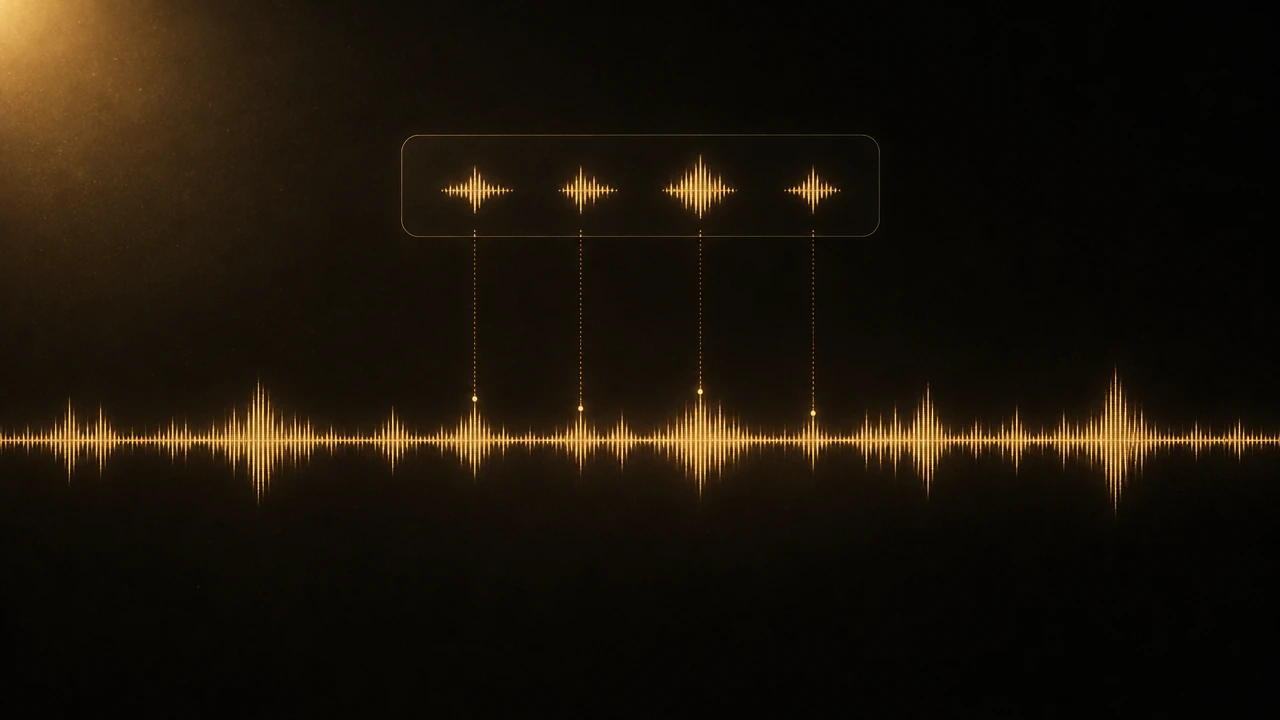
- Mark the moment. This is the one most runners skip, and it is the one that decides what you keep. When a sentence lands at mile six, you will not remember where it was by the time you shower.
Graspd, the app I build, was made for the third move. You drop a mark with the headphones' previous track gesture (a triple tap on many earbuds), hear a short confirmation, and keep running. Because the app has the transcript, the passage around that moment is attached to the mark, so after the run you read what was said instead of hunting through a timeline. More on capturing without stopping in how to take notes from podcasts without stopping the episode.
Honest limitation: Graspd works with podcasts and DRM free audio files. Audible audiobooks are encrypted and cannot be imported into any other app, including this one. For those, use your audiobook app's own tools, which in Audible's case means the clip button rather than a bookmark, and treat what follows as the routine either way.
A routine for nonfiction runs
Small enough to survive a training plan.
- Choose the run first. Easy or long. Never the workout.
- Start with something light. Music or a story for the first 20 minutes, then the nonfiction.
- Mark, don't think. One tap when something lands. No deciding whether it is worth it.
- Recall during the cooldown. Before you look at your marks, say out loud or in your head the two or three things you heard. This is the window where memory works in your favor, and retrieval is what makes things stick.
- Read the marks later that day. Two minutes. Keep one sentence in your own words for anything that still matters.
That turns a run into something you can return to. For the longer version of step four and five, see how to remember what you listen to.
FAQ
Is it bad to listen to audiobooks while running?
No, as long as you can still hear traffic and the run is easy. Studies find thinking is slightly worse while running, so expect to miss parts of a dense book. Keep audiobooks for easy and long runs, use open ear headphones outside, and check race rules, since many events discourage headphones.
Can you learn from audiobooks while running?
You can, but less than at a desk or on a walk. A 2010 meta-analysis found running impaired thinking during exercise, mostly in the first 20 minutes. Pick narrative nonfiction or books you already know, mark moments instead of trying to remember them, and recall the main points right after the run.
Are audiobooks or music better for running?
Music is better for hard efforts because it sets a rhythm and needs no attention. Audiobooks are better for long easy runs because a story makes distance feel shorter and gives you a reason to keep going. Many runners use both: music for workouts and races, a book for slow miles.
What should I listen to on a long run?
Something with a story and a strong narrator. Thrillers, memoir and narrative nonfiction hold up when your attention drifts, while books built on frameworks or step by step arguments do not. Interview podcasts also work well, and an episode is often about as long as the run itself.
How do I bookmark an audiobook while running?
Use your player's bookmark or clip button, ideally from a watch or a headphone gesture so the phone stays in your pocket. In Graspd, the headphones' previous track gesture sets a mark with the transcript attached. Audible books cannot be imported into other apps, so use Audible's clip button for those.