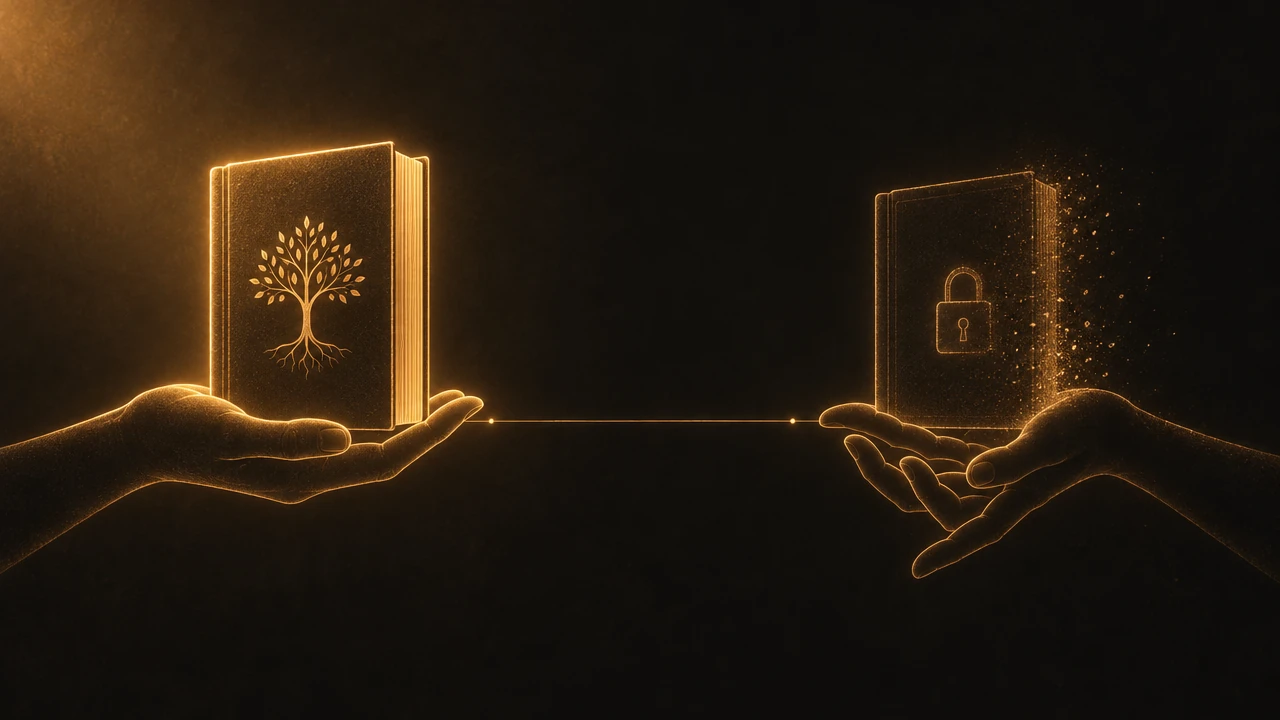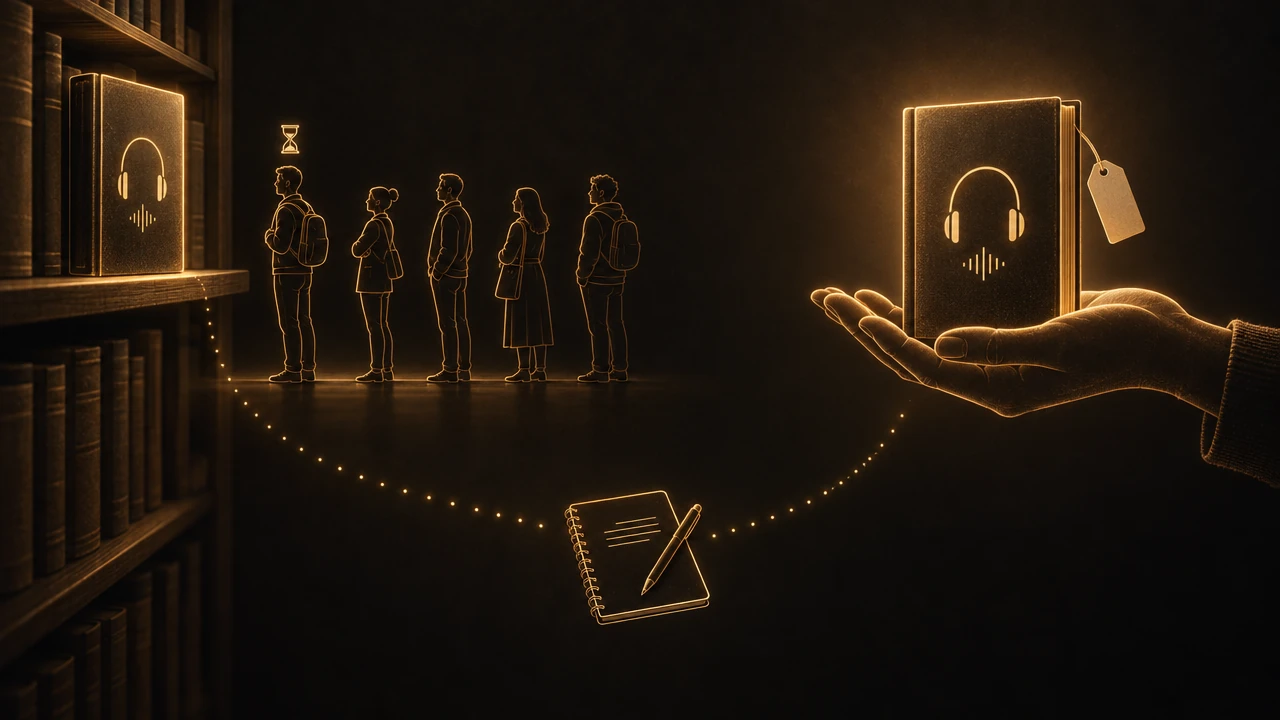
Libby is free with a library card and Audible is not, so the real question is what the free version costs you in time and control. Libby lends audiobooks your library has licensed, which means hold lists, loans that end on a date your library sets, and a book that disappears from your phone when it is due. Audible charges $8.99 a month for Standard, where you rent one title a month, or $14.95 for Premium, where a credit buys a book you keep. Use Libby for books you will hear once and can wait for, and Audible for books you want now or plan to hear again.
What is the difference between Libby and Audible?
Libby is a borrowing app. It is made by OverDrive and works with public libraries that lend digital titles through OverDrive. Your library chooses which audiobooks are in it, how long a loan lasts and how many titles you can borrow at once. Libby's help center, checked October 24, 2026, says there are no subscription costs, no in-app purchases and no late fees, because titles return themselves on their due dates.
Audible is a store with memberships attached. You either buy books (with credits or cash) or, on Audible Standard, pick one title a month from a catalog Audible puts at one million titles, which you can listen to while you stay a member.
So the comparison is not two apps with different price tags. It is borrowing against buying, and most of the pages ranking for this question stop at "one is free." The parts that decide whether free works for you are the wait, the due date and what happens to your notes.
What do Libby and Audible cost in 2026?
Libby costs nothing beyond a library card. Whether you can get one depends on your library's rules; many give cards free to residents.
Audible's help center, checked October 24, 2026, lists these plans:
| Plan | Price | What you get |
|---|---|---|
| Audible Standard | $8.99/month | 1 title a month, gone when you cancel |
| Audible Premium | $14.95/month | 1 credit a month, books you keep |
| Audible Premium, 2 credits | $22.95/month | 2 credits a month |
| Premium Annual | $149.50/year | 12 credits |
| Premium Annual, 24 credits | $229.50/year | 24 credits |
Audible Plus, the $7.95 plan most older comparisons recommend, has been closed to new members since March 3, 2026. Credits expire 12 months after they are issued or when you cancel, except credits issued through the App Store or Google Play. The full breakdown of Standard against Premium is in Is Audible Worth It?.
Why do you have to wait so long for Libby audiobooks?
Because your library is not buying the audiobook the way you would. It is licensing it, usually on terms where one copy serves one listener at a time, just like a paper copy on a shelf.
Three library blogs explain the economics in their own numbers:
- Licenses expire. Harris County Public Library describes "metered access" licenses that last a set time, usually 12 or 24 months, or a set number of checkouts. After that, the library decides whether to pay again.
- Libraries pay more. Glenview Public Library wrote in February 2026 that an ebook or audiobook costs it, on average, nearly three times what a consumer pays. Mid-Continent Public Library put the ceiling at as much as $150 per title for an ebook or audiobook.
- Copies are rationed. Mid-Continent aims for one copy for every ten people waiting. Ten people ahead of you on a two-week loan can mean weeks, and that is the system working as designed.
Two features soften this. Many libraries set aside skip-the-line copies (Libby marks them with a shamrock), which have no wait list but cannot be renewed and may have shorter loans. And some libraries also offer Hoopla, which, as the New Berlin Public Library puts it, has no holds at all, though whether you get it, and what is in it, depends on your library.
What none of this changes: a new, popular nonfiction title is the hardest thing to get quickly on Libby, and it is the easiest thing to get on Audible.
How long can you keep a Libby audiobook?
As long as your library's loan period, which you can often choose when you borrow. Libby's help center says loan periods vary by library and format. Many libraries offer 7, 14 or 21 days, and whatever you pick becomes your default for that format.
The details that catch people out:
- A loan expires at the same time of day you borrowed it, on the last day.
- When it expires, it leaves your shelf and is deleted from your device, even if you downloaded it.
- You can renew only a few days before the due date, and only if nobody has placed a hold. If someone has, Libby shows a Place Hold button instead of Renew.
- Skip-the-line copies cannot be renewed at all.
An Audible Premium purchase has no due date. You keep it after you cancel and can download it again. A title you picked through Audible Standard is closer to a Libby loan: it locks when your membership ends, unused months do not roll over, and it cannot be returned.
Which app is better for remembering what you heard?
This is where the comparison flips, and nobody ranking for it mentions it. If you listen to nonfiction to learn from it, Libby's note tools are better than Audible's.
In a Libby audiobook you can add a bookmark, highlight a passage by tapping and holding while it plays, and attach a note to either. Libby's help center says those marks are saved with the audiobook and reappear if you borrow it again. More useful still, you can export your notes, highlights and bookmarks for any title you have borrowed, even after you returned it, either as a web page or as a spreadsheet.
Audible has clips: snippets of 5 to 44 seconds (30 by default) to which you can add a note. Its help center says clips work only in the Android and iOS apps, cannot be added or managed on the website, and says nothing about exporting them. Your notes live inside one account in one app.
So the library loan expires, but what you wrote down does not have to. That matters more than it sounds: the notes are the part of a nonfiction book you will actually use later. For a routine that turns them into something you remember, see how to remember what you listen to.
Can you take Libby or Audible audiobooks to another app?
No, for both. Libby's help center says its audiobooks cannot be transferred to MP3 players. The exception is a library card with MP3 permission, which lets you download MP3 files on a computer, and the terms then say you must delete those files from all devices when the loan ends. Audible downloads are copy-protected and play only in Audible's apps.
That is a real limit for any tool that works with the audio itself. Graspd, for example, can import neither Libby loans nor Audible books. If you want a file that is yours to put anywhere, Libro.fm sells DRM-free audiobooks; the trade-offs are in Libro.fm vs Audible.
Should you use Libby, Audible or both?
Most people who listen a lot end up with both, and the split is simple:
Libby first for anything you will hear once, anything a few years old, and anything you can wait two or three weeks for. Place holds early and keep several in line, so something is always arriving. If you finish early, return the book; the next person in line gets it sooner.
Audible Premium for the books you want now, the ones you expect to revisit, and Audible Originals and exclusives, which are not sold anywhere else. One credit a month, used only on these, is the version of Audible that is easiest to justify.
Audible Standard only if you would otherwise borrow one title a month and the wait is what bothers you. You are renting either way, and Standard is the paid way to skip the queue.
If you are also weighing an unlimited-style service, Everand vs Audible covers the third model, a flat fee with a catalog that throttles heavy listeners.
How do you keep what you learned from a borrowed audiobook?
Before the due date, spend ten minutes on it. Export your highlights and notes, then write three sentences from memory about what the book argued, without looking at them first. The recall attempt is what makes the ideas stick; the export is your backup for what you forgot. Our guide to taking notes on a book has a fuller method.
Graspd is built for that step with podcasts and with audio you own outright: you set marks while you listen, discuss what you have heard so far without spoilers, and get recaps and quizzes from your own marks. It does not work with Libby or Audible titles, for the DRM reasons above.
FAQ
Is Libby better than Audible?
Libby is better if you are willing to wait, because it costs nothing and its notes can be exported even after you return a book. Audible is better if you want a title right away, want to keep it, or want Audible-exclusive productions. Many listeners use Libby for most books and Audible for a few.
Is Libby really free?
Yes. Libby's help center says the app is free, everything in it is free to borrow with a valid library card, and there are no subscription costs, in-app purchases or late fees. Your library pays for the licenses, which is why popular titles have wait lists and why libraries limit how many you can borrow.
Why are Libby wait times so long?
Libraries license digital audiobooks, usually one copy for one listener at a time, often for 12 or 24 months or a fixed number of checkouts. Libraries report paying several times the consumer price, up to $150 a title. They buy as many copies as budgets allow, so popular books queue.
What happens to a Libby audiobook when the loan ends?
It is returned automatically, removed from your shelf and deleted from your device at the same time of day you borrowed it. Your bookmarks, highlights and notes are kept and reappear if you borrow it again. You can renew a few days before the due date if nobody else has a hold.
Can you download Libby audiobooks?
Yes, inside the Libby app for offline listening, until the loan ends. You cannot move them to an MP3 player or another app. Some library cards allow MP3 downloads on a computer, but the terms require deleting those files from every device when the loan period ends.
Can you use Libby and Audible together?
Yes, and it is the cheapest way to listen a lot. Borrow on Libby whatever you can wait for and will hear once, and spend Audible credits only on books you want immediately or plan to revisit. One Audible Premium credit a month at $14.95 plus a few library holds covers most listening habits.