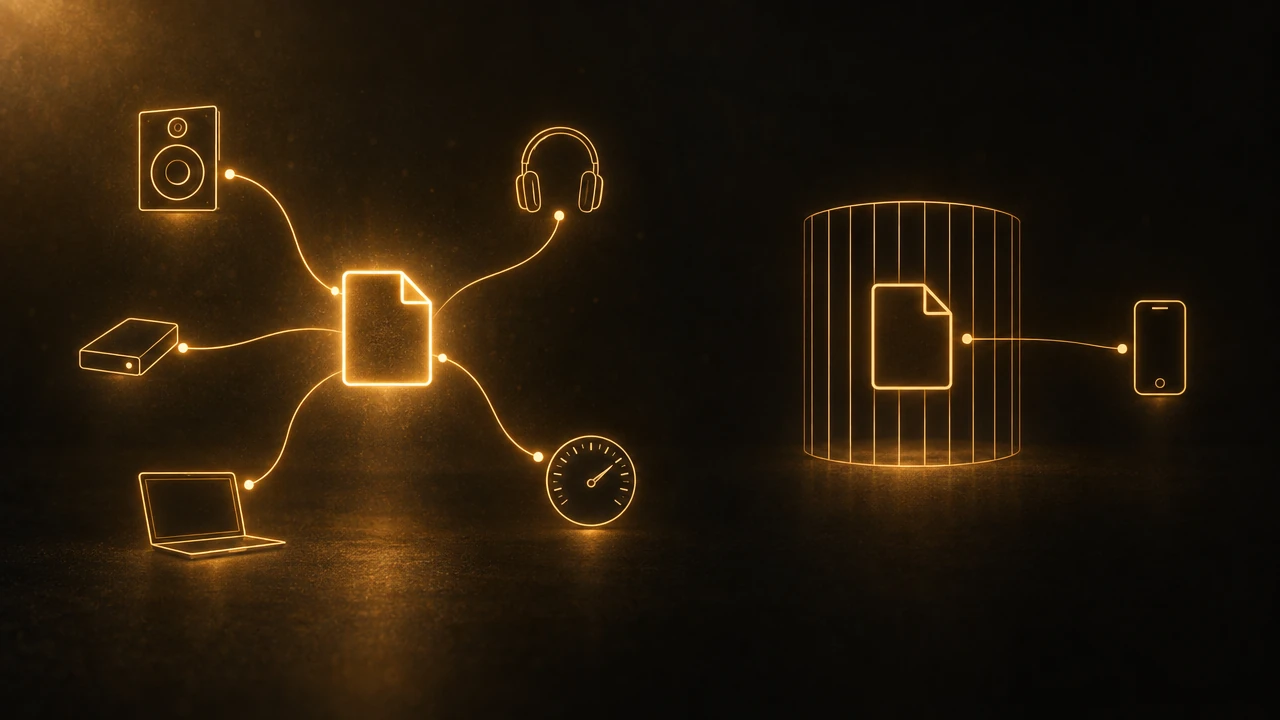
Spotify and Audible sell audiobooks in different units. Spotify Premium gives you 15 hours of listening a month from its audiobook catalog, counted at normal speed and charged again every time you replay a chapter. Audible gives you a title: one credit buys one book of any length, and you can replay it as often as you like. So Spotify is the better deal if you already pay for Premium and mostly finish short books once, and Audible is the better deal for long books and for anything you intend to listen to twice.
How does Spotify's audiobook allowance actually work?
Spotify's Premium page, checked October 10, 2026, lists Premium Individual at $12.99 a month with "15 hours/month of listening time from our audiobooks subscriber catalog." Duo ($18.99) and Family ($21.99) carry the same 15 hours, but only for the plan manager. Premium Student ($6.99) carries none. The catalog, by Spotify's audiobooks page the same day, holds over 700,000 titles.
Three rules on Spotify's support page decide how far those 15 hours go, and the pages ranking for this comparison skip all three.
First, the clock runs at book speed, not your speed. Spotify counts listening time "based on each playback of an audiobook at normal speed." If you listen at 2x, a 10-hour book still costs 10 hours of allowance. Fast listeners finish sooner, but they do not get more book for the money.
Second, replays count. Spotify says the time keeps decreasing each time you replay a book or part of one. Rewinding to catch a sentence you missed costs a little; relistening to a whole chapter costs the whole chapter again.
Third, nothing rolls over. Unused hours expire at the end of the billing cycle, and Spotify does not refund them.
When the hours run out you have two options. Audiobooks+ adds another 15 hours each month for $11.99, according to Spotify's audiobooks page on October 10, 2026. One-off top-ups come in increments of 10 hours and stay valid for 12 months from purchase; Spotify's pages do not print the top-up price, so check it in your account before relying on it.
How does Audible work in 2026?
Audible changed its lineup this year, and several ranking pages still describe the old one. Audible's help center states that new members cannot sign up for Audible Plus as of March 3, 2026. In its place sits Audible Standard at $8.99 a month on the web: one audiobook a month from the full collection, which you can keep listening to until you cancel, with unused picks not rolling over.
Premium is the plan with credits. The help center lists it at $14.95 a month for one credit or $22.95 for two, and $149.50 or $229.50 a year for 12 or 24 credits. Premium also includes unlimited listening from an included catalog. In the iPhone app the same plans cost more: Audible's App Store listing on October 10, 2026 showed Premium Plus Monthly at $15.99, an iOS Standard Plan at $9.99, the annual plan at $159.99, and extra credits at $15.99 for one, $39.99 for three or $59.99 for five.
The part that matters for a comparison with Spotify is what a credit buys. It buys a title, whatever its length. A five-hour book and a forty-hour book cost the same credit, and a title bought with a credit stays in your library after you cancel. The included catalog and any unused credits do not; the help center says you lose both when you leave.
Which one is cheaper for the books you actually listen to?
Run your own month through both systems instead of comparing sticker prices. Three typical cases, using the October 10 prices:
- Short nonfiction, one listen. Two books of about six hours each fit inside Spotify's 15 hours. If you already pay $12.99 for Premium for music, those books cost nothing extra. On Audible they cost either two months of Standard or two credits.
- One long book. A 20-hour history runs past Spotify's allowance with five hours to go. Finishing it in the same month means Audiobooks+ at $11.99, so $24.98 for the month. On Audible it is one credit at $14.95, or one Standard pick at $8.99.
- A book you plan to replay. Listening twice to a 9-hour book costs 18 hours on Spotify, which again needs Audiobooks+. On Audible the second listen is free.
The rule of thumb that falls out of this: Spotify charges by consumption, Audible charges by possession. If you finish books once and they are short, consumption is cheaper. If they are long, or you go back to them, possession is.
What about the catalog?
Audible's App Store listing claims more than a million audiobooks and podcasts plus Audible Originals that exist nowhere else. Spotify's subscriber catalog is over 700,000 titles. Most mainstream nonfiction from large publishers is on both, so the practical test is to search for the three books you want next in each app. If one of them is an Audible exclusive, the comparison is over.
One structural difference: on Spotify, audiobooks outside the subscriber catalog can only be bought in the Spotify Web Player, not in the app. On Audible everything is bought and played in one place.
Do you need Spotify Premium for audiobooks?
No. Spotify's Audiobooks Access plan costs $9.99 a month and carries the same 15 hours, but no Premium music: its page says your music listening stays on the free, ad-supported tier. Existing Premium subscribers have to cancel Premium before switching. The plan also does not work on Apple Watch, Garmin, Samsung watches or Tesla, which is worth knowing if you listen on the run or in the car.
Set against Audible Standard at $8.99, Audiobooks Access is the closer comparison: one gives you 15 hours of anything in a catalog, the other one book of any length.
Which is better if you want to remember what you hear?
This is where the replay rule stops being a footnote. Listening once at speed produces a familiar feeling about a book and very few ideas you can retrieve later, which is the subject of how to remember what you listen to. Going back to the dense chapter is one of the few things that reliably helps, and Spotify meters exactly that. If you buy nonfiction to learn from it rather than to finish it, Audible's per-title model is the friendlier one.
Neither service lets the audio leave its own app. Audible downloads are copy protected, and Spotify audiobooks stream inside Spotify. That rules out every outside tool, including ours: Graspd is an audiobook and podcast companion that discusses what you have heard so far without spoiling the rest, and turns marked moments into recaps and quizzes, but it cannot import Audible or Spotify audiobooks. It works with podcasts that publish a public feed and with audio you own outright. If owning the file matters to you, the comparison to read is Libro.fm vs Audible. If you are weighing a subscription library instead, see Everand vs Audible, and for Amazon's other bundle, Kindle Unlimited vs Audible.
FAQ
How many audiobook hours do you get with Spotify Premium?
Fifteen hours a month from the subscriber catalog, on Premium Individual and for the manager of a Duo or Family plan. Premium Student includes none. Hours are counted at normal playback speed, replays count again, and unused hours expire at the end of each billing cycle.
Is Spotify cheaper than Audible for audiobooks?
For short books you listen to once, and if you already pay for Premium, yes. For a book longer than 15 hours, or one you replay, Spotify needs Audiobooks+ at $11.99 on top of Premium, while Audible charges one credit at $14.95 or one Standard pick at $8.99.
Do you keep Spotify audiobooks after you cancel?
Not the ones you listened to from the subscriber catalog; they were time, not titles. Audiobooks bought separately in the Web Player are a different matter and do not count against your hours. On Audible, titles bought with credits stay in your library after you cancel, though the included catalog and unused credits go.
Does listening at 2x speed save Spotify hours?
No. Spotify counts listening time at normal speed, so a 10-hour audiobook uses 10 hours of allowance whether you play it at 1x or 2x. Faster playback gets you to the end sooner, but it does not stretch the 15 hours over more books.
Can I take notes on Spotify or Audible audiobooks in another app?
Not on the audio itself. Audible downloads are copy protected and Spotify audiobooks stream only inside Spotify, so no outside tool can reach them, Graspd included. Podcasts with a public feed and audio files you own outright are what third-party tools can work with.