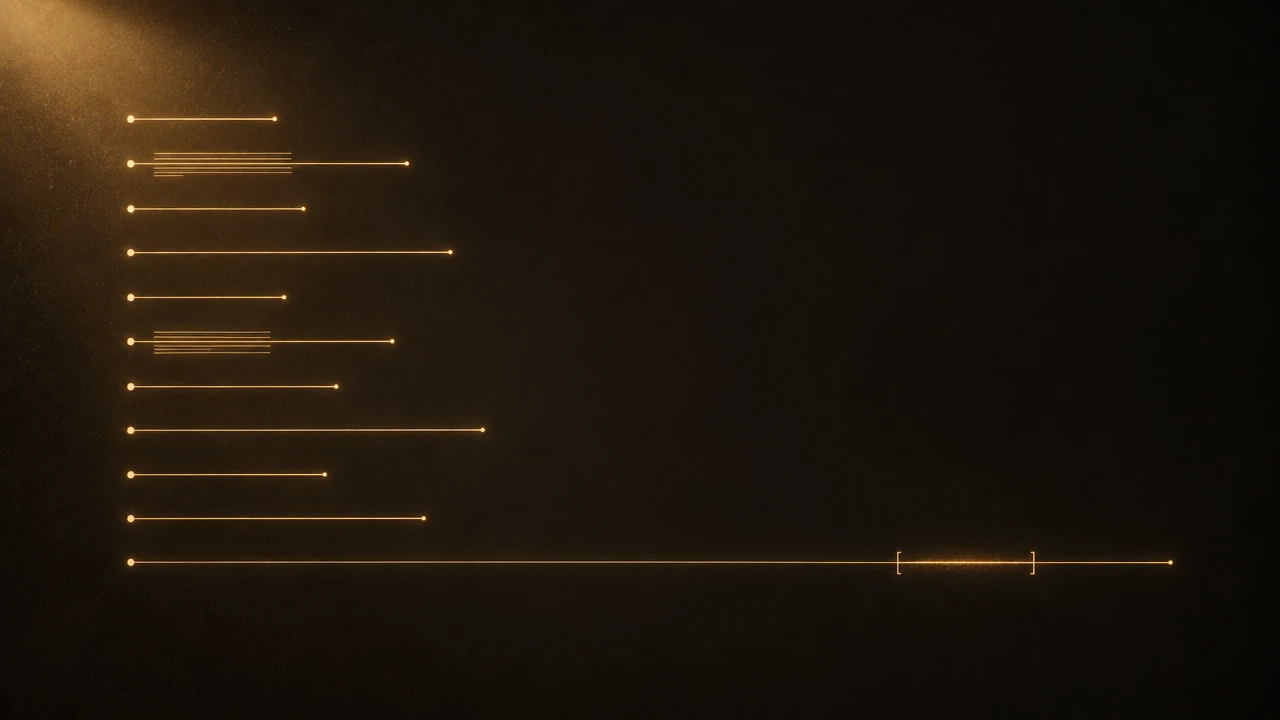
The best philosophy podcasts for most people are Philosophy Bites for single ideas in under twenty minutes, Philosophize This! for a guided start, and History of Philosophy Without Any Gaps if you want the whole story in order. The Partially Examined Life is the one for people who want to hear a text argued over for an hour. I checked fourteen philosophy shows against their own RSS feeds on September 30, 2026, and the numbers change the advice more than the rankings do. Two shows that still appear on recommendation lists have stopped publishing, and one well known show takes about 206 hours to catch up on.
How long is each show, and how often does it publish?
The figures below come from the twelve most recent episodes in each public feed. Median length is the middle value of those twelve. Publishing rate is the span between the oldest and newest of them, and minutes per week is the two multiplied.
| Show | Median episode | New episodes | Minutes per week | Transcript in feed |
|---|---|---|---|---|
| Philosophy Bites | 19 min | about every 3 weeks | 6 | no |
| History of Philosophy Without Any Gaps | 21 min | every 2 weeks | 9 | no |
| Philosophize This! | 34 min | every 3 to 4 weeks | 9 | no |
| Philosopher's Zone (ABC) | 36 min | weekly | 37 | no |
| Philosophy For Our Times (IAI) | 36 min | weekly | 36 | no |
| Elucidations | 43 min | irregular, 6 in the past year | 3 | no |
| Philosophy Talk | 51 min | weekly | 51 | some episodes |
| The Panpsycast | 52 min | every 2 weeks | 26 | no |
| The Partially Examined Life | 52 min | about 3 feed entries a week | 174 | no |
| Overthink | 56 min | every 1 to 2 weeks | 36 | no |
| Very Bad Wizards | 57 min | about 3 every 2 weeks | 90 | no |
| New Books in Philosophy | 64 min | about every 3 weeks | 23 | no |
Two things stand out. The short shows are also the slow ones, so each of the three at the top costs you less than ten minutes a week. And only Philosophy Talk attaches transcripts to its feed, as plain text on eight of its 668 episodes. The one I opened was a real transcript with speaker names, not a summary.
Which philosophy podcast should a beginner start with?
Start with Philosophy Bites if you do not know yet which questions interest you. Each episode is one philosopher on one topic, with a median of 19 minutes across the last twelve. Recent guests covered blame, lottocracy and the power of questions. Nothing depends on anything else, so a bad episode costs you one commute.
Start with Philosophize This! if you want a course. Its first episodes run in order from the Presocratics through Socrates, Plato and Aristotle, then turn to Daoism and Confucianism in episodes 7 and 8. That early run is the chronological part. The recent episodes are not a sequence at all: MacIntyre's After Virtue, two on Sloterdijk, one on Hamlet, one on Slaughterhouse-Five. A list that calls the whole show a chronological history of Western philosophy has only read the first page of the feed.
Do you have to listen in order?
For one show on this list, yes. History of Philosophy Without Any Gaps began on October 25, 2010 with Thales and reached episode 499, on Pierre Bayle, on September 13, 2026. Peter Adamson builds each episode on the ones before, which is the point of the title. The feed holds 508 episodes at about 206 hours. At a 30 minute commute each way, that is about nine months of weekdays before you are current.
Nobody needs to be current. The honest way in is to pick a period you care about and start at its first episode, not at Thales and not at this week's.
Philosophize This! has the same pull at a smaller scale: 252 episodes and about 127 hours in the feed. The Partially Examined Life is different again. Its main episodes are split into parts, so episode 400 on Dennett and qualia arrived as Part One, Part Two, and a premium Part Three that the free feed carries only as an 11 minute preview. Start at a Part One.
Which philosophy podcasts have stopped publishing?
Two shows that still turn up on recommendation lists have gone quiet.
- In Our Time: Philosophy. The BBC's philosophy feed has 157 episodes going back to 1998, and its newest is Maurice Merleau-Ponty on April 24, 2025. The main In Our Time feed continues, now hosted by Misha Glenny, with philosophy mixed in among history and science.
- Hi-Phi Nation. Its last episode, "Rise of the Music Machines," is dated May 16, 2023.
Elucidations, from the University of Chicago, is alive but has drifted. Its six episodes of the past year covered prediction markets, the housing crisis, political expertise and free speech. Good conversations, less philosophy than the name suggests.
What the ranking lists get wrong
I read the pages ranking for this search on September 30, 2026. The problems are not subtle.
The Listen Notes page for philosophy, updated September 23, puts a five part series about childhood trauma in first place and a long form interview show with veterans and Navy SEALs in third. Those are category tags, not recommendations.
A list updated the day before this post names 24 shows. Among them are On Purpose with Jay Shetty, The Mel Robbins Podcast and Esther Perel's couples therapy show. It gives In Our Time's host as Melvyn Bragg, while the feed says Misha Glenny. It lists The Partially Examined Life at three times a week, which is true of the feed but not of the show: 45 feed entries are "PEL Presents" episodes from sister programs, and the main episodes arrive about once a week.
The university list ranking second is a professor's 2019 post and is honest about its date. It recommends Hi-Phi Nation, which was right in 2019 and stopped in 2023.
Why is philosophy the hardest genre to keep?
Because a philosophy episode is an argument, and an argument is a chain. A history podcast still works if you miss a minute at a junction; you lose a detail and keep the story. Miss premise two of a four premise argument while merging, and the conclusion arrives sounding right with nothing holding it up.
That is the setting where the illusion of competence is strongest. A clear host makes an argument feel followed, and the feeling is not evidence that you could rebuild it. The test is simple: after the episode, state the argument as numbered premises and a conclusion, out loud or on paper. Where you stall is the part you did not keep. Explaining it to someone else works the same way, for the reasons in the protégé effect.
The practical half is catching the spot as it happens. You cannot write premises on a motorway. You can mark the minute and rebuild the argument later, which is the whole method of taking notes from podcasts without stopping.
Where does Graspd fit?
Graspd is the part after choosing a show. You listen in the app and tap once to mark the moment an argument turns. Later you can talk it through with an AI that has the transcript only up to where you are, so it cannot spoil what the host concludes. Since eleven of the twelve shows in the table supply no transcript at all, Graspd makes its own, and that is what lets you find premise two again. It can also quiz you on the moments you marked.
The limits, stated plainly. Graspd works with podcasts, because they are open feeds. Audiobooks bought from Audible carry DRM and cannot be imported, so audiobook support means files you own outright. And the app does not make an argument easier; it only makes it possible to go back to one. For shows beyond philosophy, the same measuring approach is in best podcasts for learning.
FAQ
What is the best philosophy podcast for beginners?
Philosophy Bites, for most people. Its episodes have a measured median of 19 minutes, each one covers a single question with one philosopher, and none depends on another. If you would rather follow a course, Philosophize This! starts with the Presocratics and moves forward in order through its early episodes, at around 34 minutes each.
Is History of Philosophy Without Any Gaps worth starting from episode one?
Only if you want the whole sequence. The feed holds 508 episodes and about 206 hours, starting with Thales in October 2010. Episodes build on each other, so starting in the middle of a period is harder, but starting at the first episode of the period you care about works well.
How long are philosophy podcast episodes?
Measured across the twelve newest episodes of each feed in September 2026, they range from a median of 19 minutes for Philosophy Bites to 64 minutes for New Books in Philosophy. Most discussion shows sit between 50 and 57 minutes. The short formats also publish least often.
Do philosophy podcasts publish transcripts?
Almost never in the feed, which is where an app can use them. Of the twelve active shows checked, only Philosophy Talk attaches transcripts, as plain text on eight episodes. For the rest, anything you want to search afterwards has to be transcribed by the app you listen in.
Is In Our Time still making philosophy episodes?
The separate philosophy feed has had no new episode since April 24, 2025. The main In Our Time feed continues weekly under its new host, Misha Glenny, and covers philosophy alongside history, science and culture. Subscribe to the main feed if you want new episodes.